Why ransomware groups keep 'shutting down' — and coming back
Key takeaways
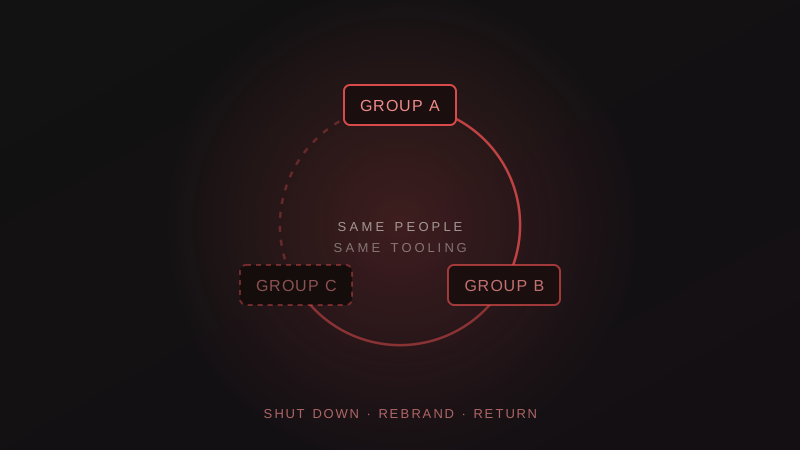
- A group's 'shutdown' rarely removes the threat — operators rebrand, affiliates migrate, and the underlying tooling is reused or forked.
- Exit scams and law-enforcement pressure churn the brand names faster than they change the actual tradecraft.
- Plan around durable behaviors and choke points, not group names, so your defenses survive the next rebrand.
The headline vs. the reality
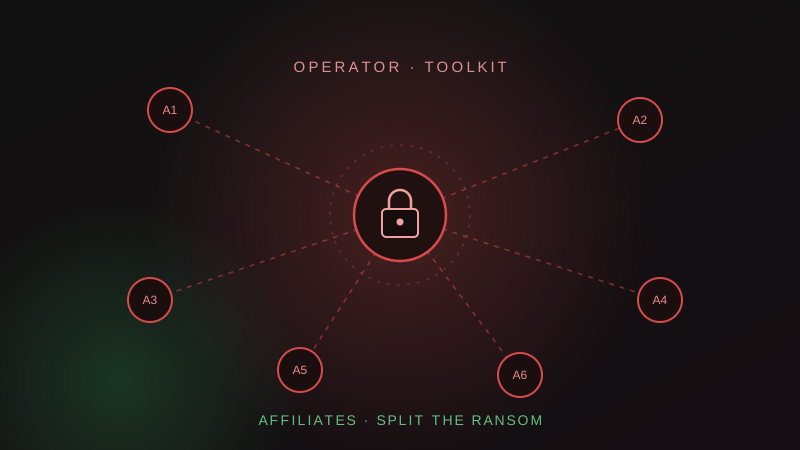
Every few months a prominent ransomware brand announces a shutdown, gets disrupted by law enforcement, or simply goes quiet. It makes for a satisfying headline. But the ecosystem is built to survive it: the operators are anonymous and can restart under a new name, the affiliates who did the actual intrusions move to a competing service overnight, and the encryptor code is frequently reused, leaked, or forked into new variants.
Why the churn happens
Brands turn over for predictable reasons. Law-enforcement action makes a name too hot to keep using. Internal disputes or exit scams — where operators pocket affiliates' share and vanish — burn trust in one brand and seed the next. And sometimes a rebrand is pure marketing hygiene: shedding a name associated with a botched decryptor or a victim who fought back publicly. In each case the name changes far faster than the people or the methods behind it.
What survives the rebrand
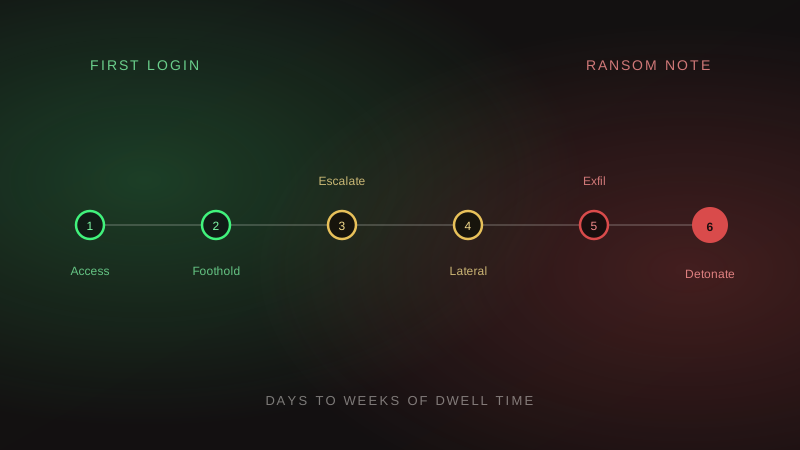
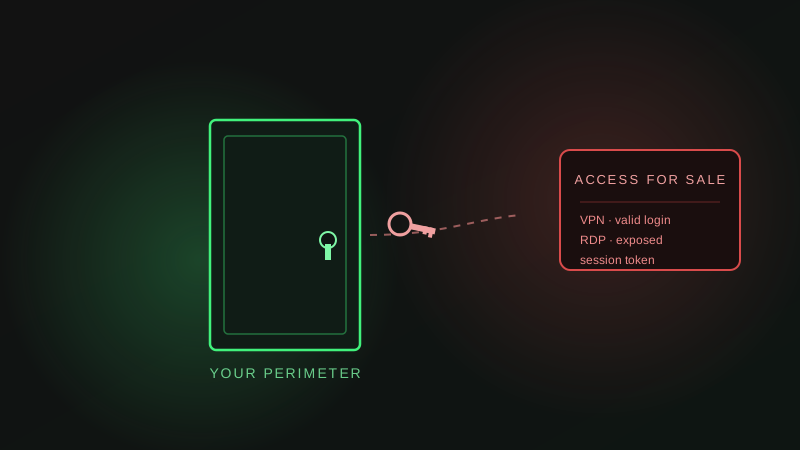
The durable parts are the ones you should plan against: valid-account initial access, Active Directory as the escalation target, living-off-the-land lateral movement, exfiltration before encryption, and backups targeted first. None of that changes when the logo does. A defense built around a specific group's indicators expires the moment that group renames; a defense built around those behaviors keeps working.
The planning implication
Treat threat-intelligence feeds as useful context, not as the foundation of your controls. Track groups to understand trends and prioritize, but architect your prevention and detection around the choke points every campaign passes through. When the next brand 'shuts down,' your posture shouldn't change at all — which is exactly the point.