Inside a ransomware negotiation: what actually happens if you engage
Key takeaways
- Opening a channel isn't a commitment to pay — it buys time, intelligence, and proof of what the attacker actually holds.
- Specialist negotiators run this for a reason: tone, timing, and process materially affect the outcome and the risk.
- Even a successful negotiation ends with unverifiable promises, so it's one input to recovery, never the plan itself.
Talking isn't paying
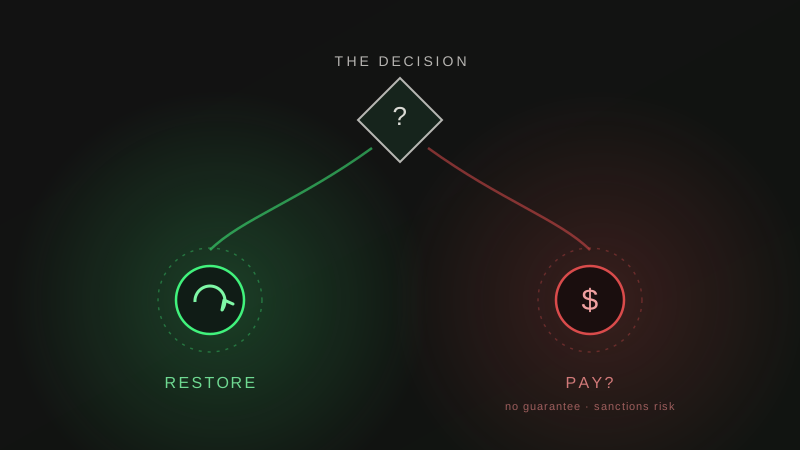
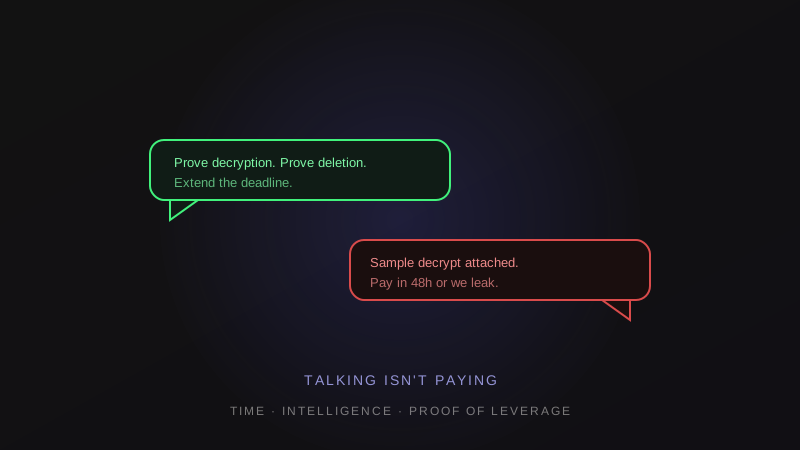
There's a common misconception that contacting the attacker commits you to paying. It doesn't. Opening a communication channel — usually through the portal linked in the ransom note — buys three things regardless of your eventual decision: time to stand up recovery and understand scope, intelligence about who you're dealing with and how professional they are, and proof of what data they actually hold. Many organizations engage precisely to gather that information while keeping every option open.
Why you don't do this yourself
Specialist ransomware negotiators exist because tone, timing, and process measurably change outcomes. They know which groups honor deals and which don't, how to request and validate proof-of-decryption and proof-of-deletion, how to slow the clock without provoking punitive leaks, and how to avoid the emotional missteps that a furious, frightened victim makes. Handing this to your general counsel or a panicked executive tends to go badly. It's a discipline, and it's usually covered under your insurer's incident response panel.
What a negotiation can and can't deliver
A good negotiation can lower the demand, extend deadlines, and extract proof that the decryptor works and that specific data will be deleted. What it cannot deliver is certainty. The deletion promise is unverifiable — you're trusting that a criminal enterprise destroyed the copies it swore it did. The decryptor may still be slow or corrupt files. Sanctions constraints may make any payment unlawful regardless of the deal on the table. Treat a negotiated outcome as one input to your recovery decision, weighed alongside your backups, never as the recovery itself.