Ransomware reporting obligations: who you have to tell, and how fast
Key takeaways
- A single incident can trigger multiple, overlapping reporting duties with different scopes, recipients, and deadlines — some as short as 72 hours.
- The clock usually starts at awareness, so the first hours of an incident are also reporting-deadline hours.
- Pre-map your obligations by jurisdiction and data type now; determining them mid-incident wastes the time the deadlines don't give you.
One incident, many clocks
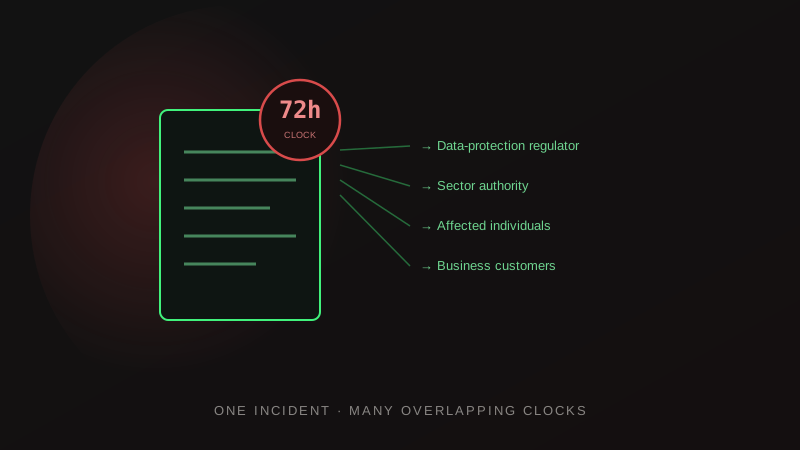
A ransomware incident rarely triggers a single, tidy notification. Depending on where you operate, what data was involved, and your sector, you may owe reports to data-protection regulators, sector regulators, national cyber authorities, affected individuals, business customers under contract, and sometimes law enforcement — each with its own scope, threshold, format, and deadline. These obligations overlap and occasionally conflict, and figuring out which apply while your systems are down is exactly the wrong time to start.
The clock starts sooner than you'd like
Many regimes start the countdown at the point you become aware of the incident, not when you've finished investigating — and some deadlines are as short as 72 hours from that moment. That means the first hours of technical response are simultaneously the first hours of your reporting clock. Organizations that treat notification as something to handle 'once we understand what happened' routinely blow deadlines, because full understanding arrives well after the deadline does. The obligation is often to report what you know so far, then update.
Map obligations before the incident
The work that pays off is done in advance: a matrix of your reporting obligations by jurisdiction, sector, and data type, with the trigger threshold, recipient, deadline, and format for each, plus the internal owner who files it. Build it with legal counsel, keep it current as you enter new markets, and store it where the incident team can reach it when the network is down. When an incident hits, you want to be executing a known list, not researching regulations under a running clock.
Coordinate reporting with everything else
Regulatory filings, customer notifications, and public communications all have to tell a consistent story, and a filing that contradicts your public statement — or that over- or under-states scope relative to what the investigation supports — creates its own liability. Route notifications through legal, keep them aligned with the forensic findings, and sequence them deliberately. The goal is to meet every obligation accurately and on time, which is far more achievable when the obligations were mapped and the templates drafted long before the incident that triggered them.