Active Directory is the prize: hardening the identity tier attackers target
Key takeaways
- Nearly every enterprise ransomware campaign runs through Active Directory, because domain admin is a master key to the whole fleet.
- A tiered administration model stops the most common escalation path: a privileged credential exposed on an ordinary workstation.
- The highest-impact, lowest-cost wins are cleaning up privileged group membership and protecting where admin credentials get used.
Why AD is the center of every campaign
In a Windows enterprise, Active Directory is the master key. Domain admin — or any of the several privileges that can be escalated to it — means the attacker can authenticate to every server, push software to every endpoint, and disable defenses fleet-wide. That's why nearly every enterprise ransomware intrusion, whatever the entry point, ends up hunting for AD privilege. Protecting the identity tier isn't one hardening task among many; it's the one that decides whether a contained problem becomes total compromise.
The escalation path tiering closes
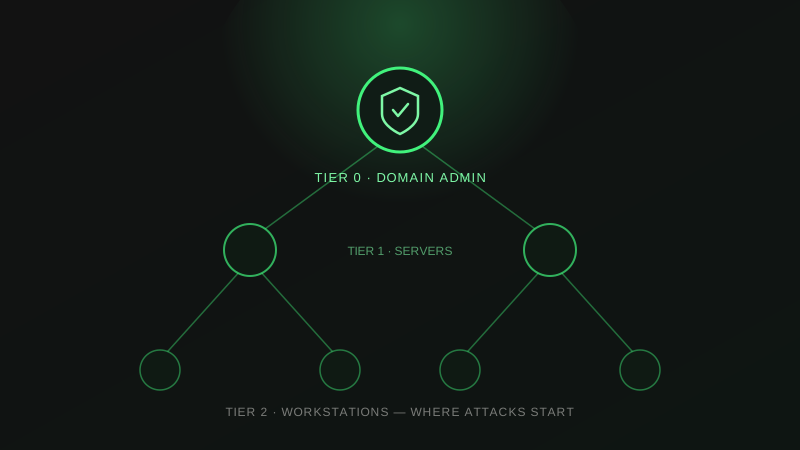
The most common escalation is mundane: a domain admin logs into an ordinary workstation to fix something, leaving privileged credentials in memory, and an attacker who compromised that workstation harvests them. A tiered administration model forbids exactly this. Tier-0 credentials (domain admins, AD infrastructure) may only be used on hardened, dedicated admin systems that never touch email or the internet; they are never entered on the user-tier machines where compromises start. Break that chain and the single most reliable escalation route closes.
The cleanup that pays for itself
Before any major project, two audits deliver outsized returns. First, privileged group membership: most environments have far more domain admins, enterprise admins, and members of dangerous nested groups than anyone can justify — often service accounts and long-departed staff. Second, where privileged credentials actually get used. Trimming the privileged population and constraining where those credentials log in removes the exposure attackers depend on, and neither requires new tooling.
Monitor the identity tier like it's the target it is
Because AD is the objective, its telemetry is your highest-value detection source: new members of privileged groups, unusual domain-controller logins, replication requests from non-DC hosts, and Kerberos anomalies are among the most reliable indicators of a live intrusion mid-escalation. Treat the identity tier as the crown jewels it is — hardened access, minimized privilege, and watched closely — and you deny attackers the master key the whole campaign is built to steal.